
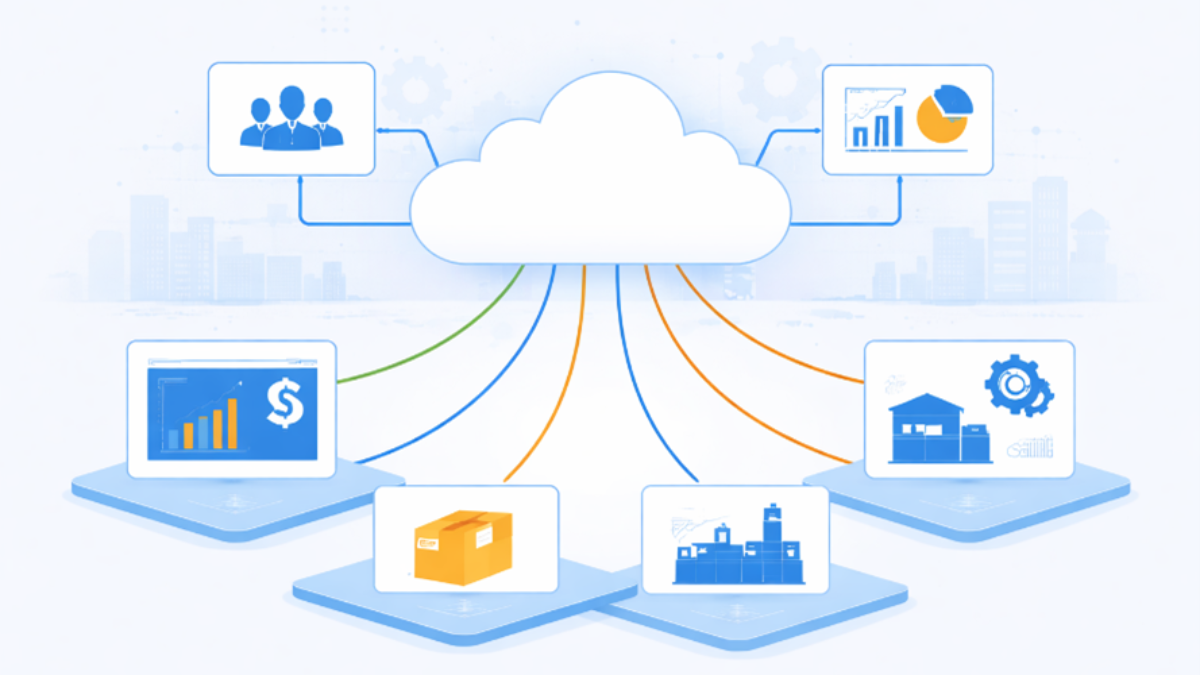
In today’s digital enterprises, the ability to access accurate, real-time data across business functions is critical for speed, agility, and informed decision-making. Yet many organizations continue to struggle with data silos—isolated and disconnected pockets of information spread across finance, supply chain, sales, HR, and operations. When teams rely on separate CRMs, ERPs, legacy platforms, or spreadsheets, the result is inconsistent data, duplication, and fragmented visibility that slows down the business.
Breaking data silos in SAP has therefore become a top priority for enterprises aiming to improve operational efficiency and enable data-driven transformation. SAP’s integrated ecosystem is purpose-built to connect business processes end to end, enabling seamless data flow, unified analytics, and a single view of enterprise performance.
What Are Data Silos?
Data silos are isolated collections of data stored within specific departments, systems, or platforms that are not easily accessible or shareable across the organization. These silos typically exist in standalone applications or legacy environments owned by individual teams. Over time, this leads to incompatible data formats, duplicated records, and information that is often outdated or inconsistent.
For large enterprises, data silos make it difficult for leadership to obtain a single, reliable view of business performance. Instead of working from unified insights, teams operate with fragmented data, limiting strategic planning, cross-functional collaboration, and operational efficiency.
Common Causes of Data Silos
Several organizational and technological factors contribute to the formation of data silos:
1. Departmental Autonomy
Business units often adopt tools tailored to their specific needs. While effective locally, these systems frequently lack integration with enterprise-wide platforms.
2. Legacy Systems
Older technologies that were not designed for modern integration standards continue to coexist with newer platforms, creating technical barriers to data sharing.
3. Mergers and Acquisitions
Organizations inherit multiple IT landscapes from merged entities, making it difficult to harmonize data models and consolidate systems.
4. Lack of Data Governance
Without standardized definitions, ownership, and quality controls, enterprise data becomes inconsistent and fragmented.
5. Organizational Culture
When teams work in isolation or compete rather than collaborate, data sharing is limited, reinforcing siloed operations.
Problems Caused by Data Silos
The impact of data silos extends across the enterprise:
- Incomplete Business Visibility: Leadership lacks a holistic view of financial, operational, and performance metrics.
- Operational Inefficiency: Manual reconciliations, duplicate data entry, and workarounds increase cost and effort.
- Poor Decision-Making: Decisions are based on partial or outdated information rather than real-time insights.
- Limited Analytics and AI Readiness: Advanced analytics, predictive modeling, and AI initiatives struggle without integrated, high-quality data.
How SAP Helps Break Data Silos
SAP is architected around integrated business processes rather than isolated functions, making it a strong foundation for eliminating data silos.
Centralized Core with SAP S/4HANA
Migrating to SAP S/4HANA introduces a unified data model through the Universal Journal, bringing finance, logistics, and operations onto a single source of truth. This consolidation significantly reduces reconciliation effort while enabling real-time financial and operational visibility.
Seamless Integration via SAP Business Technology Platform
SAP Business Technology Platform enables seamless connectivity between SAP and non-SAP systems through APIs and prebuilt connectors. With SAP Integration Suite, organizations can streamline data flows across applications, reduce manual integration effort, and accelerate innovation. SAP reports that Integration Suite customers achieve a 345% ROI over three years, a 30% improvement in developer productivity, and rapid payback within six months.
Consistent Master Data with SAP Master Data Governance
SAP Master Data Governance centralizes control over critical master data such as customers, vendors, and products. By enforcing standardized data definitions and stewardship, organizations ensure consistency and reliability across all consuming systems.
Unified Insights with Data Virtualization and Analytics
Using solutions like SAP Analytics Cloud, enterprises can analyze data from multiple sources in real time without physically moving it. This enables unified dashboards and reports that support faster, more confident decision-making.
Advanced Analytics with Data Warehousing and Data Lakes
SAP Data Warehouse Cloud and SAP Data Lake solutions bring together operational and external data, supporting advanced analytics, planning, and forecasting while maintaining governance and scalability.
Automated, Cross-Functional Processes
SAP Build Process Automation helps organizations automate workflows that span departments, ensuring data moves seamlessly between teams and reducing errors caused by manual handoffs.
Governance and a Data-Driven Culture
While technology is critical, sustainable success requires clear data ownership, quality standards, and a collaborative culture that treats data as a shared enterprise asset.
Achieving True End-to-End Business Visibility
When data silos are eliminated, organizations gain measurable business benefits:
- Operational Transparency: Real-time insight into inventory, production, and logistics.
- Financial Clarity: Immediate visibility into costs, margins, and cash flow.
- Faster Decision-Making: Trusted data available when and where it is needed.
- Improved Collaboration: Teams operate with shared data and aligned objectives.
Business Impact of Breaking Data Silos with SAP
Organizations that successfully unify data using SAP typically experience:
- Reduced operational costs through automation and process optimization.
- Improved forecasting accuracy and planning efficiency.
- Faster response to market changes and customer demands.
- Stronger compliance, auditability, and enterprise-wide data governance.
Breaking data silos is not just an IT initiative—it is a strategic business transformation. By leveraging SAP’s integrated ecosystem, organizations can move beyond fragmented systems, build a strong foundation for analytics and AI, and achieve true end-to-end business visibility that drives smarter decisions and sustainable growth.
Add a Comment